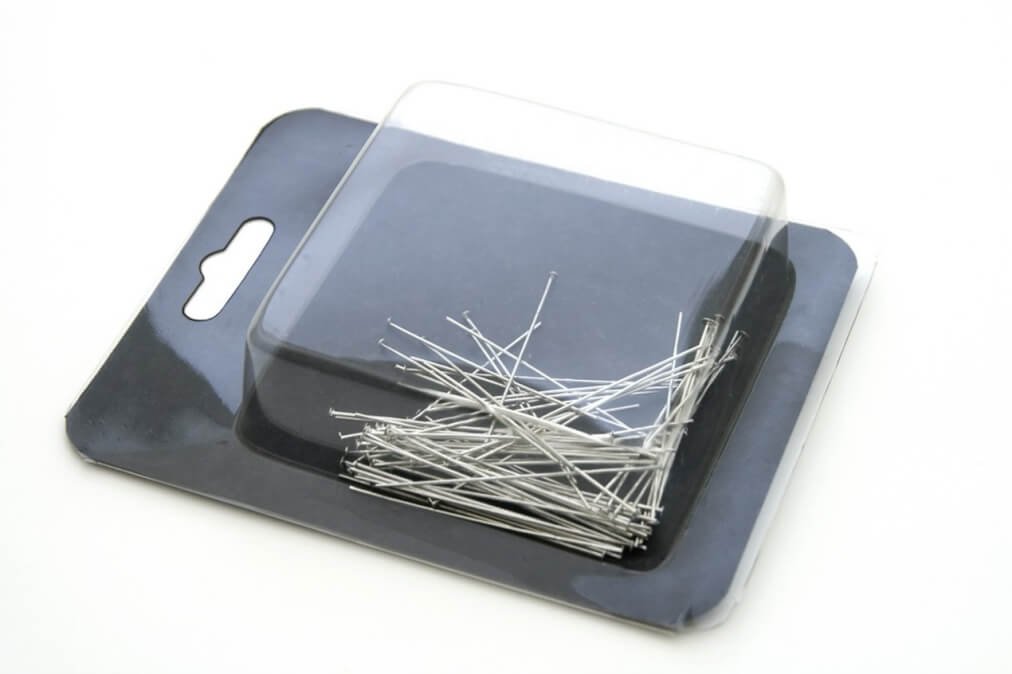
Blister packaging is a modern solution used in many industries that combines aesthetics with functionality. It allows products to be displayed in a striking manner while protecting them from mechanical damage, dust or moisture. It usually consists of two components – a transparent thermoformable film and a back made of cardboard or foil. An important advantage of blister packaging is that it can be shaped exactly to the form of the item, which increases the safety of the goods and their attractiveness to the consumer.
Materials used in the manufacture of blister packaging
The creation of blister packaging is based on the use of modern materials that provide durability and flexibility in forming. Plastics such as PET, PET-G, PVC and the increasingly popular eco-friendly PLA are the most commonly used. Each of these materials has different properties, allowing for a wide range of applications. Transparent polymers allow the product to be aesthetically displayed, while opaque materials can protect against light or high temperatures. Blister packaging made from these materials is not only practical, but also environmentally friendly, fitting in with the trend for sustainable plastics management.
Blisters can be individually shaped for a specific project. They can have hooks, be free-standing or easily disassembled.
Blister packaging production process
The production of blister packaging is a process that requires the use of precision industrial machinery. Zemat Technology Group provides advanced technologies that enable the efficient and cost-effective production of this type of packaging. The key stage is thermoforming – a special thermoplastic film is moulded into a suitable shape under vacuum and temperature. Machines such as FORMA are extremely important in this process as they precisely shape the film. The next step is cutting on slitting modules to produce finished forms in both small and large production batches.
The back of the packaging, if made of cardboard, can be prepared on cutting machines such as the ROLLMAT, which cuts the cardboard according to a pre-prepared design. The final bonding of the two elements – the plastic part and the back – is carried out using fixed temperature or high-frequency sealing machines, such as the TERMA or SIGNA DUO models.
The use of blister packaging in various industries
It is used in many industries. It is most commonly found in pharmaceuticals, where it is used to pack tablets in distinctive blister packs with aluminium foil. In addition, it is widely used in the cosmetics, automotive and household appliances industries, as well as in the packaging of small office products, toys or electronics. A key advantage of this type of packaging is that the product can be shown without having to open it, increasing its appeal to customers.